AcquireUp's data across 162,000+ events shows summer is one of the strongest seasons for advisor seminars. Here is how to build the cadence that keeps your pipeline full all year.
Every summer, good advisors make the same bad call.
They pause their marketing, tell themselves attendance will be soft, decide their prospects are all on vacation, and push growth off until September. It feels reasonable, but it hands their competition a head start.
Here's what the data actually shows: AcquireUp's campaign analytics across 162,000+ events show that summer months, May through August, generate registrations 3% above the yearly average per campaign. July and August specifically run approximately 12% above average, making them two of the highest-performing months in the entire calendar year.
So while some advisors are sitting on their hands waiting for fall, others are filling rooms, booking appointments, and entering Q4 with a pipeline already in motion. This guide is for the advisors who want to be in the second group.
We'll walk through what summer seminar marketing actually looks like, why the window performs better than most advisors expect, and exactly how to build a campaign cadence that doesn't stop when the temperature goes up.
Should Financial Advisors Run Seminars in Summer?
Not only should they, but the advisors who do consistently get better results than they expect. Running seminars between May and August is something most financial advisors treat as optional at best and a bad idea at worst, assuming attendance will be soft and prospects will be too distracted to show up. The data does not support that assumption.
For financial advisors, keeping a seminar cadence alive through the warmer months is what separates a growth system from a seasonal tactic. Advisors who pause in summer and restart in fall spend the early part of fall rebuilding momentum they never needed to lose.
Seminar marketing isn't a seasonal strategy, and the advisors who treat it like one are the ones still chasing their growth goals come October. The ones who are consistent and have a repeatable system in place are the ones with predictable net new asset growth and the numbers to back it up.
What Makes Summer a Stronger Season Than Most Advisors Expect
The case for summer isn't complicated, it comes down to three things most advisors get wrong.
Your competition is quiet, and that's your opening. When other advisors pull back on marketing, the noise disappears with them, less competition in the mailbox, fewer digital ads fighting for the same attention, and better availability at the venues that actually drive attendance. According to the 2026 Industry Index, only 21% of financial advisors use seminars as a primary marketing strategy, and even fewer maintain that cadence through summer, which means the field is less crowded than you think.
Summer removes the variable that wrecks every other season. No snowstorms, no last-minute cancellations because of ice on the roads, no apologizing to a half-empty room because the weather turned ugly. Summer gives you the cleanest attendance conditions of the year during the months that already over-index on registration.
Your best prospects aren't on vacation, they're home. Retirees and pre-retirees drive the highest seminar response rates, and they don't hibernate in summer. In a lot of markets, the affluent households that head south in winter are back home and back to their routines right now, and their financial questions didn't disappear with the calendar change.
How Summer Seminar Marketing Works: Step by Step
Step One: Launch in May and June — Before the Season Peaks
Summer peaks in July and August, so May and June are your runway to get there. Express Digital campaigns launch quickly, while Performance-Based and Custom-Crafted campaigns launch in about five weeks. An advisor who kicks off a campaign in early May is in front of qualified households before the season hits its stride, while an advisor who waits until July is playing catch-up during the best months of the year.
You also don't have to start from scratch when figuring out what works in your market because your Marketing Consultant already knows, using the compounding intelligence of 162,000+ campaigns, including the ones already run in your geography. The path from your next event to your next client is shorter and better-defined than you probably realize.
Step Two: Build a Cadence, Not a One-Off
One summer campaign is a test, but two or three is a growth engine, and that distinction matters more than most advisors give it credit for.
AcquireUp's 2026 Industry Index found that 52% of financial advisors host seminars but nearly half do so occasionally. That's the gap between advisors who say seminar marketing doesn't work and advisors who've made it their primary acquisition channel. The difference isn't talent or market, it's repetition.
Plan two to three campaigns between May and August, because the compounding effect is real. Every campaign you run makes the next one smarter, as every data point from your market gets added to a system already built on 40 years of campaign intelligence. You get better targeting, sharper strategy, and a clearer picture of your ideal client, not just from your own history, but from the 162,000+ events that came before yours. Growth isn't a campaign, it's a cadence, and summer is the worst time to forget that.
Step Three: Use Real-Time Data to Optimize as You Go
Here's something that surprises a lot of advisors: you don't have to wait until a campaign is over to know how it's performing.
LeadJig gives you real-time visibility into everything, so you know who’s coming before your seminar starts. Household-level insights go well beyond a name and a phone number, providing you with their age, estimated household income, estimated net worth, home value, and professional background.
You walk into that seminar prepared, not guessing, and every insight from that campaign feeds the ones that follow, tighter targeting, smarter creative, and a growth system that gets more efficient the longer you run it.
Step Four: Convert the Pipeline Before Fall Even Starts
Summer's lighter professional calendar doesn't just help attendance, it helps conversion too.
Track That Advisor benchmark data shows educational seminars convert from set first appointment to kept first appointment at 69%, and meal-based seminars convert at 60%. Fewer scheduling conflicts for your team and your prospects means those numbers get even better, the appointments stick, the follow-up happens, and the pipeline actually moves.
The advisors who stay consistent through summer don't start fall from zero. They enter Q4 with momentum, clients already onboarded, appointments already scheduled, and a system already running at full speed while everyone else is just warming back up.
Example: What This Looks Like in Practice
Take a growth-minded advisor who runs two campaigns between June and August, one educational workshop and one meal-based seminar, each targeting 8,000 households through LeadJig.
The typical funnel looks like this: 8,000 households targeted, 30 households attend, 18 appointments get scheduled, 1.5 new clients sign on, and $1.05M in net new assets lands in the book, per campaign. Run that twice in a summer and you're not describing a quiet season anymore. You're describing a growth quarter that compounds into the rest of the year.
Key Takeaways
- Summer seminar marketing works best when campaigns launch in May and June, because advisors who wait until July to start planning have already missed the runway that sets up peak performance.
- AcquireUp's data across 162,000+ events shows summer months running 3% above the yearly average for registrations per campaign, with July and August hitting roughly 12% above average — numbers that make a strong case for staying in the market.
- Maintaining a cadence of two to three campaigns through summer is the difference between testing a strategy and actually running a growth system.
- Consistency through summer builds real momentum into fall, while pausing breaks it. Rebuilding that momentum costs more time and money than staying consistent ever would.
- Summer's lighter schedule reduces scheduling friction for everyone involved, which translates directly into higher kept-appointment rates and a cleaner conversion path from seminar room to signed client.
- The advisors who grow net new assets consistently year over year aren't luckier than anyone else. They're simply more consistent, and that consistency is the entire growth engine.
So, Should You Run Seminars This Summer?
In short, summer seminar marketing works because most advisors don't do it and the ones who do are running in a less crowded field, during months when the data already favors them, without the weather disruptions that make winter and spring frustrating.
For financial advisors serious about organic growth, this is one of the most effective windows in the calendar year, not because it's complicated, but because it's consistent. When fall arrives, you don't want to be starting over — you want to already be ahead.
Next Step
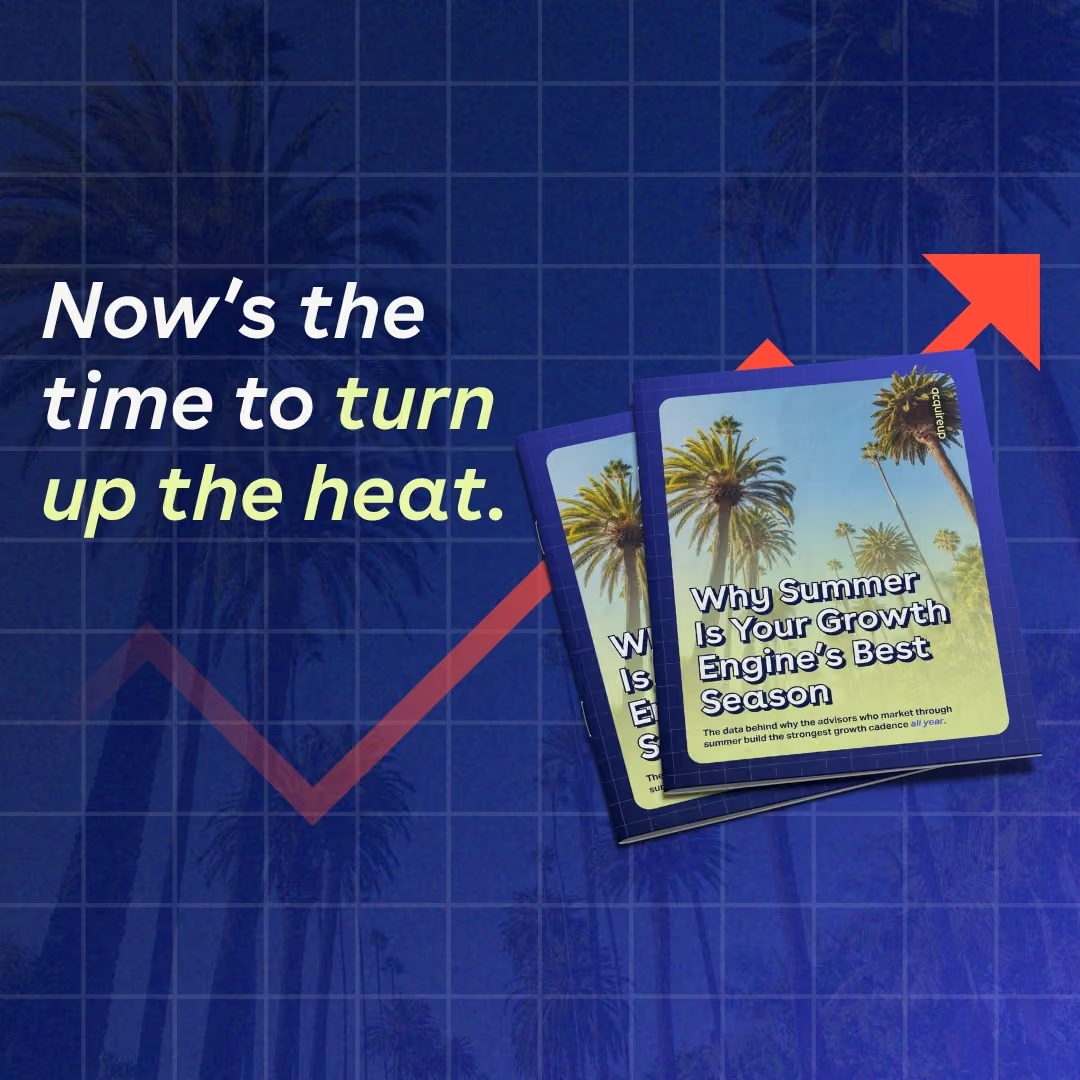
If you want the full data behind why the advisors who market through summer build the strongest growth cadence all year, download Why Summer Is Your Growth Engine's Best Season — AcquireUp's proprietary campaign performance data, the funnel math, and a practical three-step strategy you can put into motion right now.



.png)

.avif)