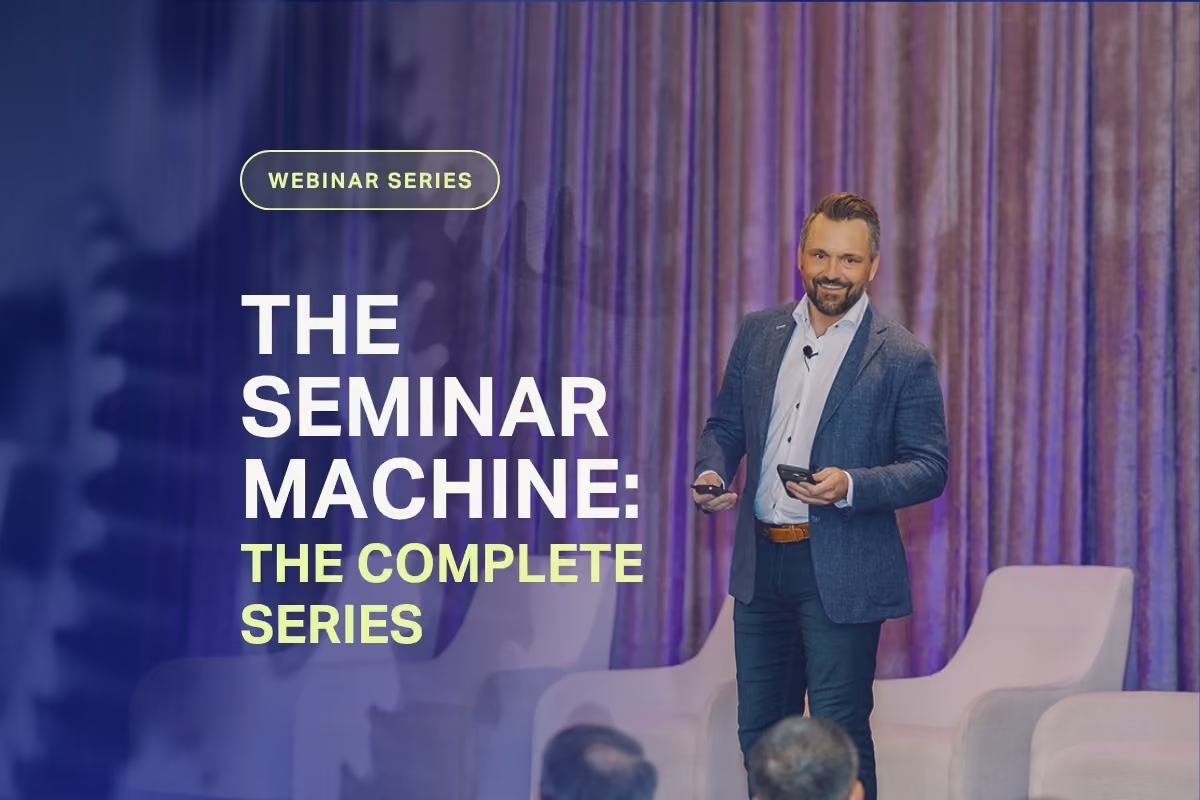
Brad Gotto grew Fiat Wealth Management from $27M to nearly half a billion in AUM using seminars as the primary growth driver. Watch the full three-part Seminar Machine series to get his complete playbook, free.
Most financial advisors are great at these: The planning, the relationships, the trust-building. That part comes naturally.
Building a business that grows consistently? That's where things get complicated.
Not because seminars don't work. They do. And not because the market isn't there. It is. The problem is that most advisors run their practice like a practitioner and expect it to grow like a business.
They do a seminar when the calendar has room. They follow up when they remember to. They hire people as fires break out. They make decisions on gut instead of data. And then they look at their growth numbers and wonder why the needle isn't moving the way it should.
That's the real problem, and it's the one Brad Gotto, Founder of Fiat Wealth Management, and Greg Bogich, CEO of AcquireUp, spent three sessions dismantling from every angle.
The result is the Seminar Machine series: three webinars, each one tackling a different layer of the same problem, and all three now available to watch for free.
Who Is Brad Gotto?
Brad Gotto is not a consultant who studied advisors. He is one.
He co-founded Fiat Wealth Management, spent nine years as a wholesaler learning how the best independent advisors across the country actually built their businesses, then came back to Fiat in 2020 with one goal: build a business, not just a practice.
Since then, Fiat has grown from $27 million to nearly half a billion in assets under management, with close to 1,000 workshops delivered along the way. Brad has built a full team around him, including hunting advisors, servicing advisors, a dedicated dialer, and a COO, all operating within a repeatable system that no longer depends on Brad being in every room.
When Brad talks about what works, he's talking about what he's experienced, the failures included. Especially those.
What the Series Covers
Part One: Being Intentional in Building a Business
The first session is about the mindset shift that makes everything else possible.
Brad's argument is simple and direct: you can be the best financial advisor in your market and still build a mediocre business, because being a great advisor and running a great company are two completely different skill sets. Most advisors never separate them. They stay stuck in the day-to-day, doing things they're not good at and don't enjoy, because nobody told them they had permission to hand those things off.
Part One walks through the framework Brad used to build Fiat, the T-chart exercise that identifies what you're good at versus what you like, how to think about hiring as a leverage play rather than an expense, how he transitioned out of client relationships without burning them, and what it actually means to run a practice like a CEO rather than a top producer.
This session is for every advisor who's wondered why their growth feels unpredictable even when they're working harder than ever.
Part Two: Seminar Best Practices, The Do's and Don'ts
Once you have the mindset, you need the playbook.
Part Two is Brad's full seminar playbook, delivered with the kind of specificity you only get from someone who's been in the room nearly a thousand times. Not theory or general principles but specifics.
Brad walks through his topic selection process, including why he chose taxes and estate planning and what the data showed about which subjects consistently attract the most qualified prospects. He covers venue decisions down to the details most advisors overlook, from parking and room layout to where staff should stand and how reserved signs in the back rows change the energy before the event even starts.
He also breaks down how he opens every seminar, why he never shakes hands with the room before he speaks, why the first sound attendees hear is a video clip and not his voice, and what he is trying to accomplish in the first 11 seconds. From there he covers presentation length, how to manage room energy when the crowd is flat, and why his workshops run 90 minutes when most advisors stop at 60.
The session closes with what Brad considers the most important part of any seminar: the close itself. He walks through the yellow sheet method, the sticky note scheduling process, and the exact language behind a conversion rate that consistently lands between 60 and 70% of the room, with a show-up rate above 93%.
If you run seminars and you want to know what separates the advisors who see predictable results from the ones who don't, this session is the answer.
Part Three: The Follow-Up System That Turns Attendees into Clients
When the event ends, the real work begins.
Part Three is about what happens after the room clears. This is where most advisors lose the ROI they earned over the previous 90 minutes.
Brad breaks down the three types of people who leave every event: those who scheduled on the spot, those who said yes but didn't schedule, and the no-shows who registered but never came. Each group gets a different follow-up cadence, different messaging, and different urgency. Treating them all the same is how you lose half your pipeline before the week is out.
The session covers the full follow-up framework Fiat runs: timing, channel mix, what to automate versus what to handle personally, and how to call people back with something worth saying instead of just checking in. It also covers the first visit structure that makes second visits nearly automatic, and what the pivot from educator to advisor actually sounds like when the language is right.
This is the session for advisors who have run good events and walked away wondering why the numbers didn't reflect it.
Why This Series Exists
Brad is an evangelist by nature. He spent nine years watching advisors fail at the same things he failed at, and watching others solve those same problems in ways that were completely replicable. The reason he does shadowing events, speaks at conferences, and showed up to record three webinars is the same reason Fiat runs the way it runs: if the system works, share it. There's enough business out there for everyone.
Watch All Three Sessions
All three webinars are available now, completely free. Watch them in order if you can, the progression is intentional. Part One sets the foundation. Part Two builds the execution. Part Three locks in the return.
If you're a financial advisor running seminars, thinking about running them, or trying to figure out why yours aren't producing the way they should, start here.
Watch the Seminar Machine Series



.avif)

-2.avif)