Great seminars do more than fill seats. They spark connection, steady the room, and guide prospects toward real next steps. See how timing, venue, segmentation, and thoughtful follow up turn one event into lasting momentum for your practice.
Seminars remain one of the most dependable ways for financial advisors to build trust, spark meaningful conversations, and turn interest into lasting client relationships.
The difference between a half-full room and a waitlist rarely comes down to expertise alone. It comes down to strategy and the small, intentional choices made before and during the event.
Timing, venue, segmentation, confirmation touchpoints, and personalization all compound into a better experience and a stronger conversion path. When you design your seminars with purpose, you give prospects a reason to show up.
How to Welcome Seminar Attendees and Create Strong First Impressions
The seminar doesn’t begin on slide one. It begins at the first impression.
A warm welcome sets the tone. Greet attendees by name. Use name tags to spark conversation between neighbors. Ask what brought them in and what they hope to learn. These early interactions ease hesitation and give you valuable context to tailor examples later in the presentation.
Use visuals to guide and ground your audience. A printed agenda, clear signage, and organized seating show that every detail has been considered. These cues tell attendees they’re in capable hands and set a tone of professionalism before you ever begin speaking.
When the environment feels intentional, guests naturally gain confidence in your expertise. That confidence makes the next-step conversation feel like a continuation rather than a pitch.
What Is the Best Time to Host a Financial Advisor Seminar?
If you want full seats, timing is everything. Consider the audience and when they’re likely to show up.
Mid-week evenings typically perform best for live events, including webinars. That’s because Mondays are too busy and Fridays compete with family plans. Retirees and pre-retirees tend to prefer late afternoons. Meanwhile, working professionals are more likely to show up around 6:30 p.m. after work.
Pick what fits your audience then stick to the schedule. Holding events at the same time each month helps your community know when to expect you and builds steady momentum over time.
How to Choose the Right Venue for Financial Advisor Seminars
The room talks before you do. Think about the spaces that are most likely to foster the ideal outcome.
Educational venues like libraries, community colleges, senior centers, and community spaces naturally set a learning tone. They’re accessible, credible, and built for attention.
That type of setting is ideal for workshops that position you as a teacher and guide. If you are hosting a dinner format, an upscale restaurant can elevate the experience and prime guests for longer conversations without feeling salesy.
Regardless of format, choose a space that is easy to reach, professionally maintained, and comfortable to sit in for at least an hour. Considering the ideal setting—as well as lighting, sound, and seating density—can all influence how long people stay and the likelihood they book a consultation afterward.
How to Segment Your Audience for Better Seminar Invitations
Invitations aren’t meant to be generic announcements. They’re supposed to be the filters that attract the right people and prime them for engagement.
Success begins with mapping out audiences and their pain points. In just about every case, this involves life stage segmentation. Consider the nuances and needs of each group when prepping your invites.
For example, pre-retirees tend to respond to language about income durability, sequence of returns, and Social Security planning. Meanwhile, business owners lean in when you frame time savings, tax strategy, and liquidity.
Segmenting by demographics, goals, or life stage ensures your message lands with relevance that leads to action. Tactically, direct mail still performs for older audiences, while email and targeted digital work well for professionals who live in their inbox and on their phones.
What Are the Most Effective Ways to Promote Financial Seminars?
Advisors who embrace a multi-channel rhythm don’t just get more registrants. They get attendees who arrive pre-engaged and ready to participate.
Effective promotion mixes email, social, and direct mail, supported by partnerships that extend into adjacent networks like CPAs or community groups. Treat each touch as a value delivery rather than a ticket punch.
Share one practical insight from your topic in every reminder. Make registration easy and visible.
How to Reduce Seminar No-Shows with Confirmation Calls
Two friendly touches can cut no-shows dramatically. It goes like this:
First, call three to four days out to confirm attendance—offering the perfect time to confirm details, parking, and accessibility. Then, send a short reminder the day before with a helpful note and a sincere thank you for registering.
This blend of call and message reduces uncertainty and shows your team is organized and thoughtful. Advisors implementing a pre-event reminder plus a post-event follow-up report stronger attendance and faster appointment setting.
How to Start a Financial Seminar Presentation That Engages Attendees
A great talk can win just about anyone over. Often, those types of talks start with a short, relatable story that mirrors a common challenge in the room.
The talk is just part of the equation. The content and presentation are equally important.
Be sure to make the content and conversation accessible to the audience. Break complex topics into digestible sections. Keep slides clean. Use visuals to make abstract ideas tangible, not to repeat your script.
What Is the Sticky Note Method for Booking Seminar Appointments?
Interaction drives momentum. When attendees feel involved, they are far more likely to stay engaged and take action. One simple way to spark that engagement is with the Sticky Note Method, a visual and low-pressure approach that encourages attendees to book appointments before they even leave the room.
Before your seminar begins, place sticky notes with available appointment times on a poster board near the back of the room. Add a simple message such as “Tax Reduction Strategy Review – Pick a time!”
As the event wraps up, invite guests to select a time that works best for them. When people see others taking notes from the board, it creates social proof, a subtle cue that encourages participation and builds momentum. The effect is immediate as attendees begin scheduling their own follow-up sessions on the spot.
It is a small gesture that makes a measurable difference. A clear offer name, visible availability, and a touch of peer influence turn interest into real appointments. The result is a more engaged audience and a stronger close to every seminar.
Learn more about the sticky note method and other proven strategies to pack the room with AcquireUp's Ultimate Seminar Playbook for Financial Advisors.
How to Run a Successful Financial Advisor Seminar: Complete Checklist
Seminar success is built on consistency. Choose the right timing. Pick a venue that fits your audience. Send invitations that speak to what people care about. Confirm attendance. Tell a clear story. Follow up while interest is high.
When each step works together, you build credibility and trust that lasts beyond the event.
Advisors don’t need to start from scratch. They need a process that works and a partner who helps make it repeatable.
To see how top advisors run their most successful events, download AcquireUp’s Ultimate Seminar Playbook for Financial Advisors today.
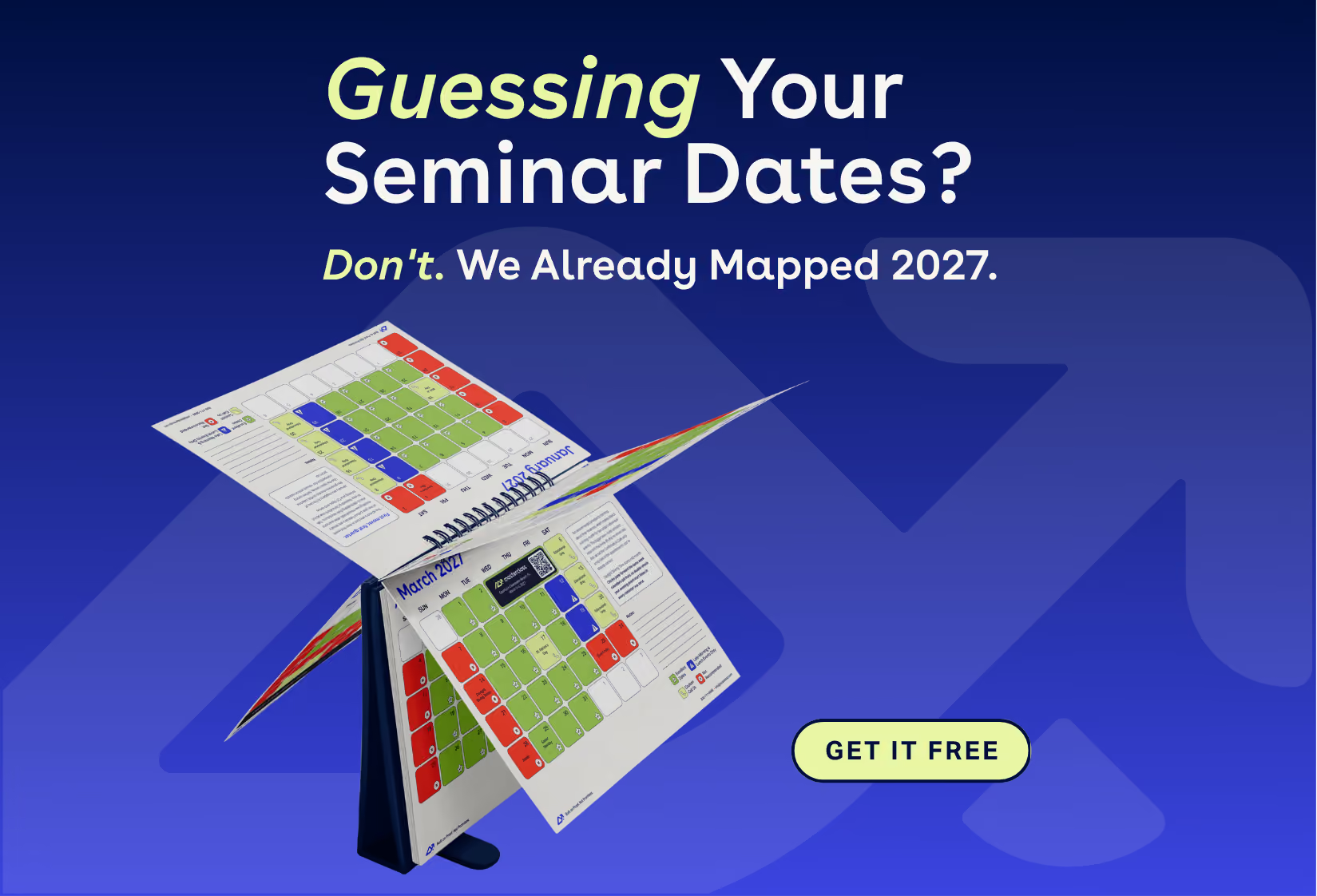
Download your free copy ofThe Seminar Season Checklist by Frank Maselliand turn your next seminar into a conversion machine.




.png)
.avif)