Learn how financial advisors turn a blank 2027 calendar into a seminar marketing system, building a cadence that compounds instead of resetting after every one-off campaign.
Most financial advisors run seminars the same way they run a fire drill: only when growth feels urgent. One event goes well; momentum builds, and then months pass before the next one gets scheduled. By the time it does, the advisor is starting over, not building on anything. A blank 2027 calendar won't fix that on its own. What fixes it is what advisors do with that calendar: treat it as a cadence to run, not a to-do list to fill in whenever growth feels overdue.
Building a growth engine is one of the most effective ways to fix this, because it turns growth from a reaction into a cadence you can count on. The channel itself already earns the effort: across more than 162,000 completed AcquireUp events, the average seminar attendee is worth roughly $1 million, and that's before a single follow-up call is made. In this guide, we'll explain what actually separates an engine from a one-off campaign, why that difference compounds year over year, and how advisors can build a cadence that keeps working in the months most advisors write off without a second look.
What Is a Seminar Marketing Growth Engine?
A growth engine is a repeatable cadence of events run on a set schedule instead of whenever growth feels overdue. A calendar is where that cadence lives. A single seminar is a campaign. An engine is what happens when an advisor runs them on purpose, so each one builds on what the last one learned.
For financial advisors, this means the difference isn't really about frequency, and it isn't about how many dates are filled in. It's about whether each event on the calendar is an isolated bet or one data point in a system that's getting sharper. One campaign can only tell you it worked or it didn't. A cadence, mapped out across the year, tells you why, and lets you act on that the next time.
Why a Growth Engine Beats One-Off Campaigns for Financial Advisors
- It removes the scramble that costs advisors their best options. Performance-Based and Custom-Crafted campaigns need about five weeks of lead time to launch well. Advisors without a running system default to whatever's fastest when the need becomes urgent, not what actually fits their market and topic.
- It compounds instead of resetting. Every campaign run on a consistent cadence feeds data back into the next one: what venue worked, what topic landed, what timing converted. A one-off campaign generates a result. A system generates an edge that builds.
- It supports compliance-friendly education rather than pressure-based selling. A steady cadence of educational and meal-based events keeps the focus on informing prospects over time, not closing them in a single high-pressure event.
How to Build a Growth Engine Using Your 2027 Seminar Planning Calendar: Step by Step
- Open the calendar and pick a rhythm before you pick a date. Decide whether your practice fits a monthly, quarterly, or seasonal cadence before locking a single venue. This is the direction-setting step, and it's the one most advisors skip in favor of booking whatever's next on an empty page.
- Build real lead time into the calendar, not around it. Performance-Based and Custom-Crafted campaigns need about five weeks to launch, so mark that runway on the calendar before the event date, not after. If you're moving faster than that, Express Digital can be live in as little as 48 hours.
- Don't leave the summer months blank. Many advisors quiet down in summer, assuming attendance will drop and prospects will disappear, and their calendars go empty from May to August because of it. AcquireUp's own campaign data across more than 162,000 completed events says otherwise: summer months (May through August) run about 3% above the yearly average for registrations per campaign, with July and August specifically landing closer to 12% above average. Retirees and pre-retirees, the audience that drives the strongest seminar response, don't take the summer off, and many snowbirds are back home during these months, keeping their financial professionals local.
- Let each calendar entry sharpen the next one. AcquireUp studies what's actually working in your market (creative, venue, timing, topic) and feeds every completed campaign's results into the next one you schedule. A calendar built around a system gives that compounding effect something to run on all year instead of in scattered bursts.
Example: How Advisors Turn One-Off Campaigns Into a System
In practice, an advisor might start with a single Q1 seminar the way most advisors do, then use what worked (topic, room size, follow-up timing) to plan the next one instead of waiting for the next slow quarter to force the decision. By summer, that same advisor is running two or three campaigns on a steady cadence to keep momentum going instead of pausing, and by October, when estate planning awareness peaks nationally, the system is already in place to meet the moment instead of scrambling to build one from scratch.
Key Takeaways
- A system beats a one-off campaign because it turns each event into a data point instead of an isolated bet.
- Advisors see the strongest results when they treat summer as an underused opportunity instead of a dead season. AcquireUp's data shows May through August running about 3% above the yearly average for registrations per campaign, with July and August closer to 12% above average.
- Consistency and follow-up, not any single event, drive the compounding advantage.
The Bottom Line
In short, a seminar marketing system works because it replaces the one-off bet with a cadence that gets smarter every time it runs. For financial advisors, it's an effective way to build a predictable, scalable pipeline of qualified households without relying on last-minute tactics or high-pressure sales moments. This approach helps ensure that growth compounds year over year instead of resetting every time momentum stalls.
Its Time to get Smarter
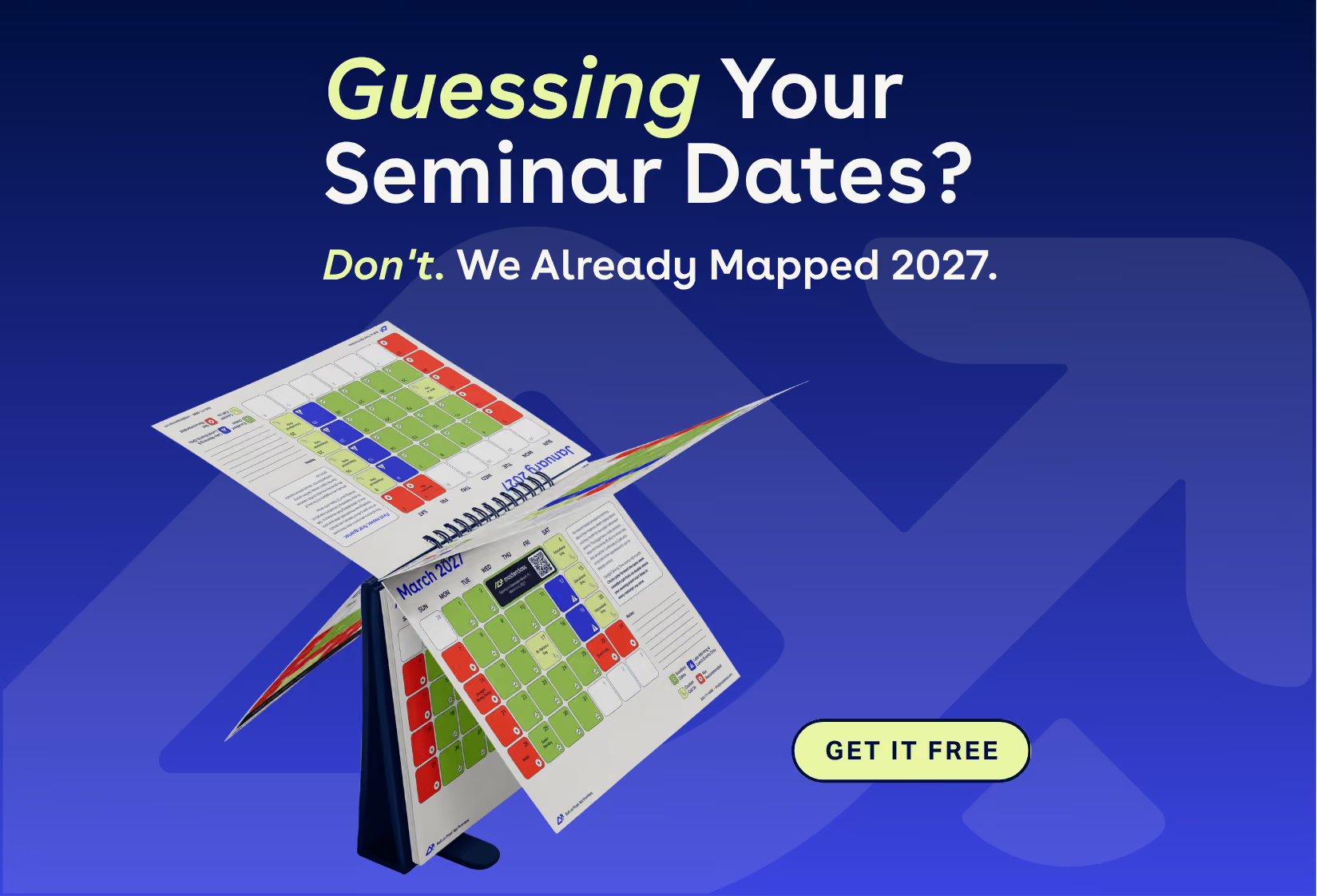
You don't need to build this cadence from a blank page. Download the 2027 Seminar Planning Calendar for free and get the excellent dates, caution windows, and seasonal openings already mapped out for you, then talk to your AcquireUp Marketing Consultant about the rhythm that fits your practice and your market.
Download the 2027 Seminar Planning Calendar for free


.avif)

-2.avif)